
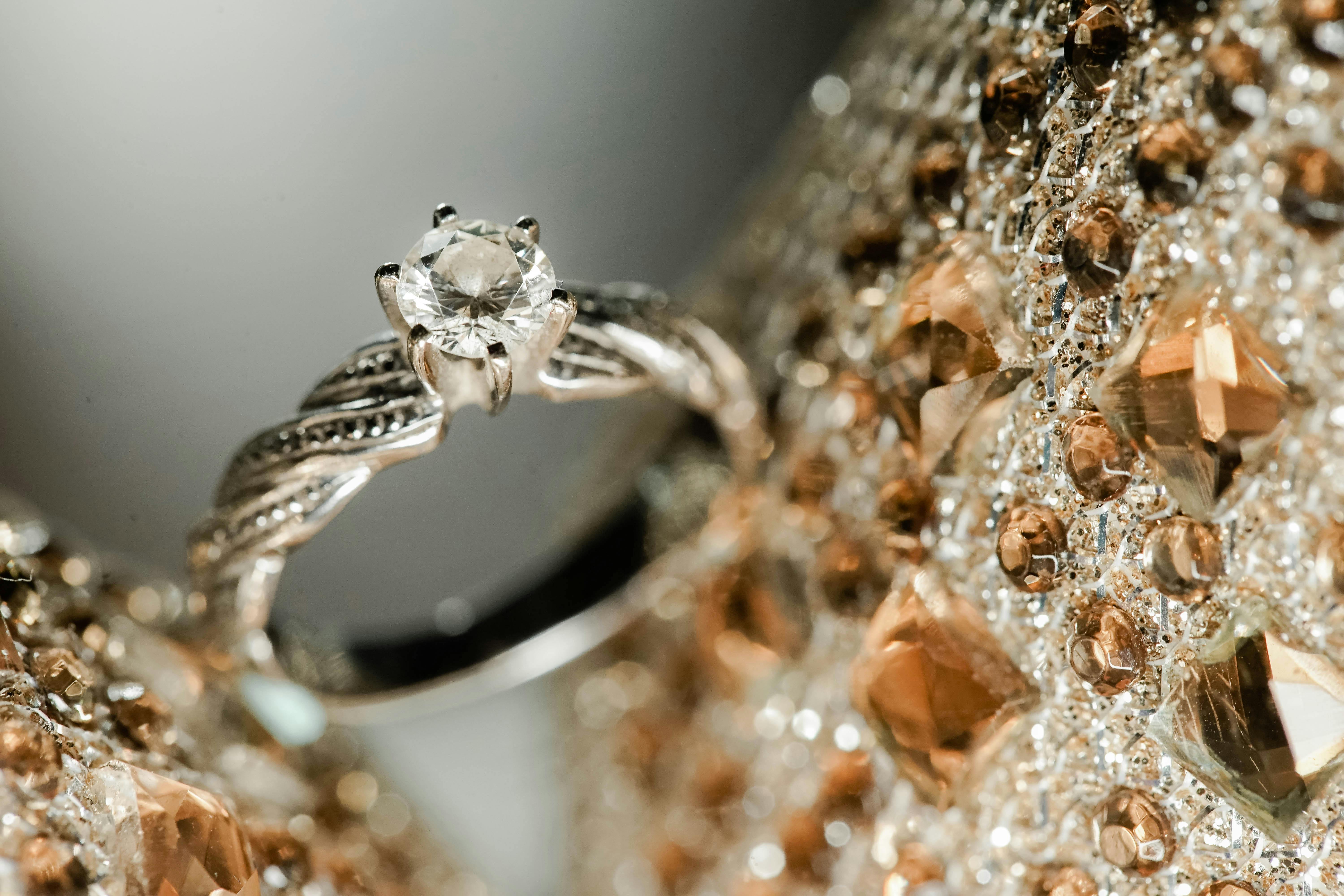
Moissanite vs. Diamond: What You Actually Need to Know
Moissanite has become one of the most talked-about alternatives to diamonds in the engagement ring market, and for good reason: it's brilliant, durable, and dramatically less expensive. But it's also genuinely different from a diamond in ways that matter to some people and not at all to others. Here's the honest breakdown.
What Is Moissanite?
Moissanite is silicon carbide — a naturally occurring mineral first discovered in a meteor crater in 1893 by Nobel Prize-winning chemist Henri Moissan (hence the name). Natural moissanite is extraordinarily rare, so virtually all moissanite sold today is lab-created.
It's not a diamond simulant in the way that cubic zirconia is. Moissanite has its own distinct properties, its own grading system, and its own aesthetic character.
How They Compare
Hardness. Diamond is the hardest natural substance on earth, scoring 10 on the Mohs scale. Moissanite scores 9.25 — harder than any other gemstone except diamond. For everyday wear, both are exceptionally durable.
Brilliance. This is where things get interesting. Moissanite actually has a higher refractive index than diamond (2.65 vs. 2.42), which means it bends light more dramatically. The result is more fire — those colorful flashes of light — but also a different kind of sparkle. Some people find moissanite's sparkle more dazzling; others find it slightly artificial-looking, particularly in larger stones where the "disco ball" effect can become noticeable.
Color. Most moissanite is sold as "colorless" or "near-colorless," but in certain lighting conditions, particularly outdoors in sunlight, moissanite can show a slight yellow or green tint. This is more noticeable in larger stones. Premium moissanite (often called "Forever One" or similar branded grades) has largely addressed this issue.
Price. A 1-carat moissanite typically costs $300–$600. A comparable natural diamond costs $4,000–$8,000. A comparable lab-grown diamond costs $800–$1,500. The price difference is real and significant.
The Questions That Actually Matter
Will people know it's not a diamond? Probably not. Moissanite passes a standard diamond tester (it conducts heat similarly to diamond), and to the naked eye, the difference is not obvious. A trained gemologist can distinguish them, but your coworkers cannot.
Does it hold its value? No. Moissanite, like lab-grown diamonds, has essentially no resale value. If that matters to you, a natural diamond is a better choice.
Is it "less meaningful" as an engagement ring? Only if you decide it is. The meaning of an engagement ring comes from the commitment it represents, not the geological origin of the stone. Many couples choose moissanite deliberately and happily.
Our Honest Take
Moissanite is a legitimate, beautiful option for people who want a large, brilliant stone at an accessible price point. It's not a compromise — it's a different choice with different trade-offs. The same is true of lab-grown diamonds, which offer a middle ground: chemically identical to natural diamonds, more affordable, but with limited resale value.
The best way to decide is to see all three options side by side. Come in, look at them in different lighting conditions, and trust your eyes.
Book a consultation and we'll show you natural diamonds, lab-grown diamonds, and moissanite — no pressure, just honest information.